As the cycling season comes to an end, one of the most common questions is: how much time should I take off the bike?
My answer is simple: it depends on the individual.
There is no universal rule, no magic number of days and no off-season formula that works for every cyclist.
A rider training six or seven hours per week, with relatively low training stress and limited racing, is in a very different situation from someone training 12–15 hours per week, completing demanding intervals, racing regularly and pushing their body for months without a meaningful break.
Treating these two athletes in exactly the same way makes little sense.
The objective of the off-season transition is not simply to stop training because the calendar says the season is over. It’s to assess where you are, understand what your body needs and make the right decisions to prepare for the next training cycle.
1. Training load matters
The first thing to consider is how much work you’ve accumulated throughout the season.
How many hours do you train each week? How intense are your sessions? How many races, gran fondos and demanding events have you completed? Have you had adequate recovery between them?
Weekly training volume is important, but it doesn’t tell the whole story. Two cyclists training 12 hours per week can have very different fatigue levels depending on intensity, training history, sleep, nutrition, life stress and their individual response to training.
For someone riding six or seven hours per week at a manageable intensity, reducing training volume and removing structured intensity for a while may be sufficient.
For an athlete consistently training 10, 12 or 15 hours per week, particularly with frequent racing and demanding sessions, the need for a proper recovery period deserves much more attention.
The higher the accumulated training load, the more carefully we need to assess how much recovery is required.
This doesn’t mean every high-volume cyclist automatically needs the same number of days off. It means the decision needs to be made based on the athlete, not a generic calendar.
2. Does everyone need an off-season transition?
Not necessarily.
Some cyclists can finish their season, reduce their training load and continue riding without any need for a clearly defined break. Others may benefit from several weeks of reduced training, while some may need a period completely off the bike.
Consider a cyclist who trains six hours per week, rides mostly at a comfortable intensity, races occasionally and finishes the season feeling fresh. There may be little reason to prescribe a complete break from cycling.
Now consider an athlete who has trained 12–15 hours per week, raced almost every weekend and accumulated substantial fatigue over several months. That athlete may benefit significantly from a period of recovery.
These are very different scenarios.
The decision should take into account training history, accumulated fatigue, recent performance, motivation, physical condition and upcoming goals.
The mistake is assuming that everyone needs an off-season simply because it’s October or November.
Equally, assuming you don’t need one because you can still hit your power targets can be misleading. It’s possible to maintain good performance while carrying fatigue.
The goal isn’t to prescribe recovery unnecessarily, nor to avoid it at all costs. It’s to identify what the individual actually needs.
3. When is time completely off the bike important?
For cyclists who train consistently throughout the year, taking a period completely off the bike can be one of the most valuable parts of the transition.
But it isn’t necessary for everyone.
If your training volume is relatively low, your sessions are manageable and you’re recovering well, reducing the demands of training may be enough.
However, if you’ve spent months accumulating substantial training hours, completing demanding intervals and racing frequently, a complete break may be appropriate.
Why?
Because recovery isn’t always about making every session easier. Sometimes, it’s about temporarily removing the demands of cycling altogether.
Taking time away from the bike gives you a break from structured sessions, power targets, training metrics and the pressure to maintain fitness. It also creates an opportunity to address minor niggles, catch up on sleep, spend time with family and friends, and enjoy activities that may have taken a back seat during the season.
For some athletes, a complete break of around one to two weeks can be a reasonable starting point. Others may need less or more, depending on their circumstances.
There is no magic number.
Time off the bike should be a response to the athlete’s needs, not a rule that everyone must follow.
4. But won’t you lose fitness?
Yes, some fitness may decline when you reduce or stop training. That’s normal.
Your aerobic adaptations and performance-specific conditioning are influenced by how much training you do. A sufficiently long period of inactivity can reduce some of those adaptations.
But the important question is not whether you might lose a little fitness.
It’s whether maintaining every last watt throughout the off-season is worth sacrificing the opportunity to recover and start your next preparation block in a better position.
You don’t need to maintain peak condition for 12 months of the year.
You need to be prepared to perform when it matters.
A short, planned break is very different from abandoning training for months. The objective is to step away temporarily when appropriate, then return progressively when you’re ready.
Don’t confuse a temporary reduction in fitness with losing the progress you’ve made over years of consistent training.
Remember: your long-term development depends on the quality and consistency of your training over multiple seasons, not on whether you maintain your best numbers every week of the year.

5. Use the off-season to explore other sports and activities
The transition period can also be an excellent opportunity to step away from cycling and introduce some variety into your routine.
When you’re training consistently throughout the year, most of your physical activity revolves around riding a bike. Although cycling develops excellent aerobic fitness, it doesn’t challenge every aspect of your physical capacity.
Depending on your training history and individual needs, the off-season can be a good time to incorporate activities such as:
- Walking and hiking.
- Swimming.
- Running, if you’re accustomed to it or introduce it gradually.
- Gym-based strength training.
- Mobility work and other general physical activities.
There are several potential benefits.
First, variety. Doing something different can help you mentally disconnect from structured cycling and return with renewed motivation.
Second, general athletic development. Strength training can improve muscular strength and address weaknesses that cycling alone may not adequately develop. Other activities can challenge different movement patterns, coordination and general fitness.
Third, a change from repetitive cycling-specific demands. After months of pedalling, a different activity can provide a welcome physical and mental change.
However, alternative sports are not automatically recovery activities. Running, for example, introduces impact forces and can cause significant muscle soreness in cyclists who aren’t accustomed to it.
And there is an important distinction: if you’re taking time off because you’ve accumulated substantial fatigue, replacing 12 hours of cycling with 12 hours of running, gym sessions and other demanding activities defeats the purpose.
The objective is not to maintain the same training load through different sports.
It’s to recover, enjoy movement and, where appropriate, develop qualities that will benefit you in the long term.
Rest should remain the priority when recovery is what you need.
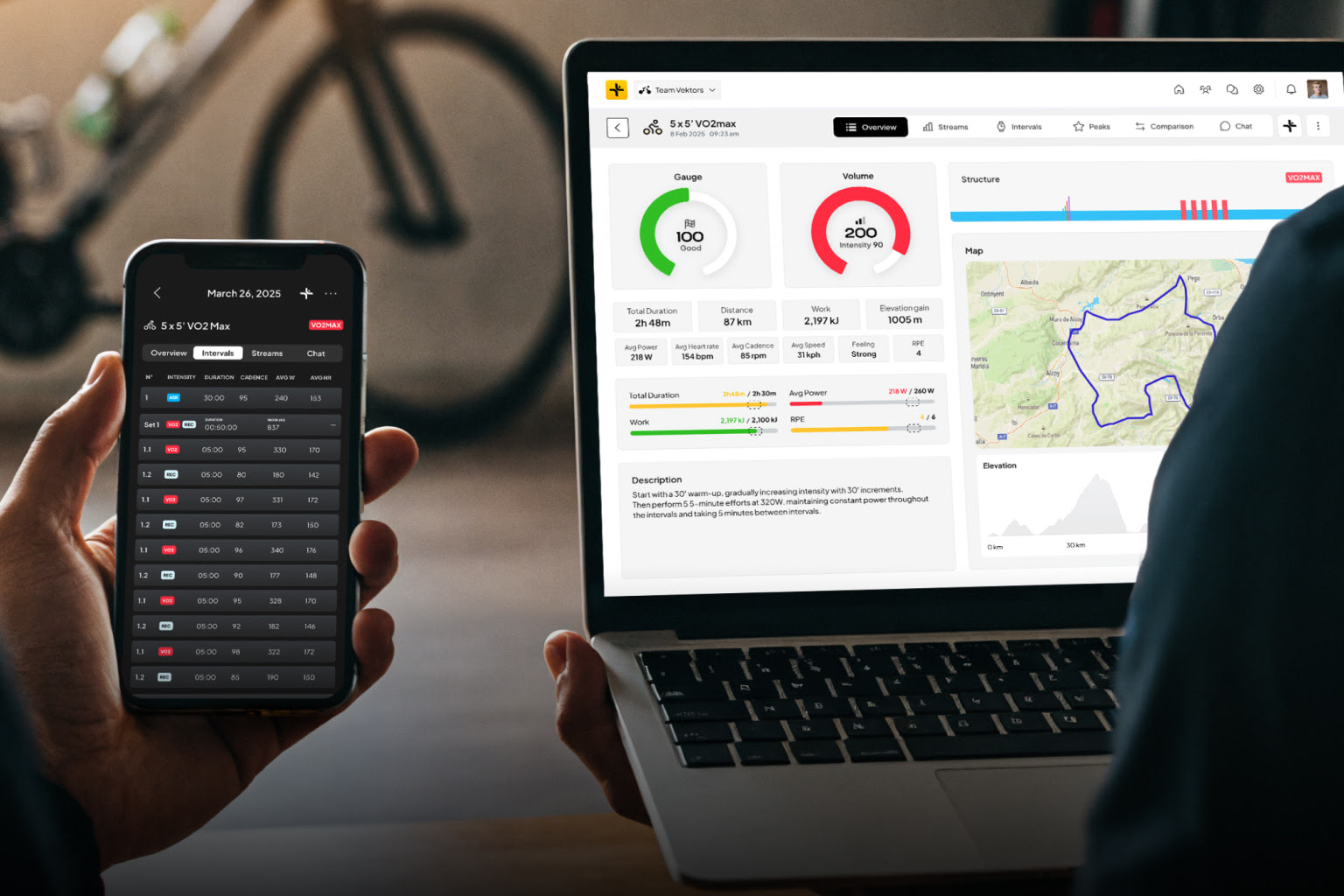
6. This is where your coach becomes particularly important
The off-season transition is one of the periods when having a coach can make a real difference.
During the racing season, the focus is often on executing the training plan, preparing for events and managing performance.
At the end of the season, the question changes: what does this particular athlete need now?
A good coach should look beyond the number of hours completed and assess the bigger picture.
This includes:
Training history: Weekly volume, intensity, consistency and accumulated workload.
Racing demands: The number of events completed, their duration and intensity, and the recovery available between them.
Performance trends: Whether the athlete has continued to improve, plateaued or experienced a decline.
Recovery indicators: Sleep, perceived fatigue, motivation and the athlete’s response to training.
Life outside cycling: Work, family responsibilities, stress and other factors affecting recovery.
Next season’s objectives: When the athlete needs to be ready and how much preparation time is available.
No single metric can make this decision. Power data, training load and performance trends are useful, but they must be interpreted alongside the athlete’s feedback and wider circumstances.
The coach’s role is to bring these pieces together and decide when to reduce training, whether a complete break is appropriate, and when to begin building again.
Timing matters.
Too little recovery when fatigue is high may mean carrying that fatigue into the next training block. Conversely, prescribing an unnecessarily long break without considering the athlete’s goals may delay preparation without providing additional benefit.
The objective is to get the timing right for that individual athlete.
Good coaching isn’t just about knowing when to push. It’s also about knowing when to pull back.
7. Review your season before planning the next one
The transition period is also an opportunity to review your performance objectively.
Instead of immediately jumping into another training plan, ask yourself what the previous season has taught you.
Consider the following questions:
- Did you perform as expected in your key events?
- Were you strong at the start of races but faded towards the end?
- Could you produce high power when fresh but struggle after several hours?
- Did your performance improve throughout the season, or did you plateau?
- Were you consistent with your training and nutrition?
- Did you struggle to balance training with work, family and recovery?
- Were there periods when you trained hard but saw little improvement?
Your answers should help identify the areas that deserve attention next season.
Perhaps you need better aerobic durability, improved fuelling, greater repeatability during hard efforts or a more sustainable approach to training.
Maybe the issue wasn’t fitness at all, but inconsistency or insufficient recovery.
Repeating the same training year after year without evaluating the results is not a strategy for continuous improvement.
It’s simply repetition.
8. Remember that cycling performance is more than FTP
The off-season is also a useful time to look beyond a single power number.
FTP is a valuable training reference, but it doesn’t fully describe your ability to perform over a long event.
Your critical power, W′, aerobic capacity, durability, fuelling strategy and ability to recover between efforts all contribute to performance in different ways.
For example, two cyclists with similar threshold power can have very different results in a five-hour gran fondo. One may maintain power exceptionally well after several hours, while the other experiences a significant decline as fatigue accumulates.
That difference matters.
Rather than entering the new season focused exclusively on increasing FTP, consider your broader performance profile.
Where are your strengths? Where are your limitations? What does your target event actually demand?
These answers should influence the training you prioritise when structured preparation resumes.
9. How should you return to training?
Once the appropriate recovery period has been completed, avoid jumping straight back into the same workload you were completing at the end of the season.
Start with easy, enjoyable rides and gradually rebuild consistency. Reintroduce structure and increase training demands according to your response.
For some cyclists, the transition may be as simple as reducing training volume and removing structured intensity before progressively returning to normal training.
For others, it may involve a complete break, a period of alternative activities and a more gradual return to cycling.
There is no need to force a fixed sequence or duration. Your training background, recovery and goals should determine the approach.
The objective is to begin the next training block ready to absorb the work, rather than carrying unnecessary fatigue into another season.

Final thoughts
There is no one-size-fits-all approach to the off-season.
A cyclist training six or seven hours per week is not necessarily in the same position as someone training 12–15 hours, racing frequently and accumulating substantial fatigue throughout a long season.
Some athletes will benefit from a period completely off the bike. Others may only need to reduce their training load and intensity. Some may not need a clearly defined transition at all.
The important thing is to understand the difference.
Don’t take time off simply because somebody else does. And don’t keep riding simply because you’re afraid of losing fitness.
Assess the workload, consider the fatigue, review the season and make a decision based on the individual.
Use the transition to recover when necessary, explore other activities where appropriate, and prepare intelligently for the demands of the next season.
Ultimately, the goal isn’t to finish the off-season with the highest fitness possible.
It’s to start your next season ready to train, adapt and perform.
Train smarter. Recover with purpose. Build for the long term.
Matteo Cigala
Founder & Head Coach