
For the last decade I’ve coached everyone from first-time sportive riders to elite cyclists competing for World Championship medals.
One thing has become incredibly clear.
The athletes who improve the most aren’t necessarily the ones with the best genetics, the most expensive bike or even the most time to train.
They’re the athletes making the right decisions consistently.
And that’s exactly where coaching goes far beyond simply writing workouts.
The Biggest Misconception About Coaching
Many athletes believe coaching is just about receiving a training plan.
Complete today’s workout.
Repeat tomorrow.
Get faster.
If only it were that simple.
The reality is that training plans—even well-designed ones—are built on assumptions.
They assume you’ll sleep well.
They assume work won’t become stressful.
They assume you won’t get sick.
They assume you’ll recover exactly as predicted.
Life rarely follows the plan.
Great coaching isn’t about creating the perfect programme.
It’s about making the right decisions when reality doesn’t match the programme.
Data Is Powerful. Context Is Everything.
Today’s endurance athletes collect more data than ever before.
Power.
Heart rate.
Heart rate variability.
Sleep.
Recovery scores.
Nutrition.
Training load.
The challenge isn’t collecting more numbers.
It’s understanding what they actually mean.
I’ve seen athletes panic because their HRV dropped for two days.
Others increase training simply because their FTP went up.
Some ignore accumulating fatigue because their Garmin says they’re “ready.”
None of those decisions should be made using a single metric.
Every piece of data needs context.
That’s where experience still matters.er perceived exertion, and better fatigue resistance, are exactly that — reports and anecdotes from a competitive environment with every incentive to talk up a new product, not independently verified performance data.
AI Has Changed Coaching Forever
Artificial intelligence is transforming endurance coaching, and that’s a good thing.
The best AI platforms don’t replace coaches.
They remove repetitive tasks, analyse huge volumes of data and surface insights that would otherwise take hours to find. Modern platforms can continuously update training zones, estimate physiological changes and personalise recommendations as new information arrives.
Instead of spending time manually updating thresholds or reviewing every training file line by line, coaches can focus on what humans do best:
- understanding the athlete
- making strategic decisions
- providing motivation
- communicating effectively
- solving problems
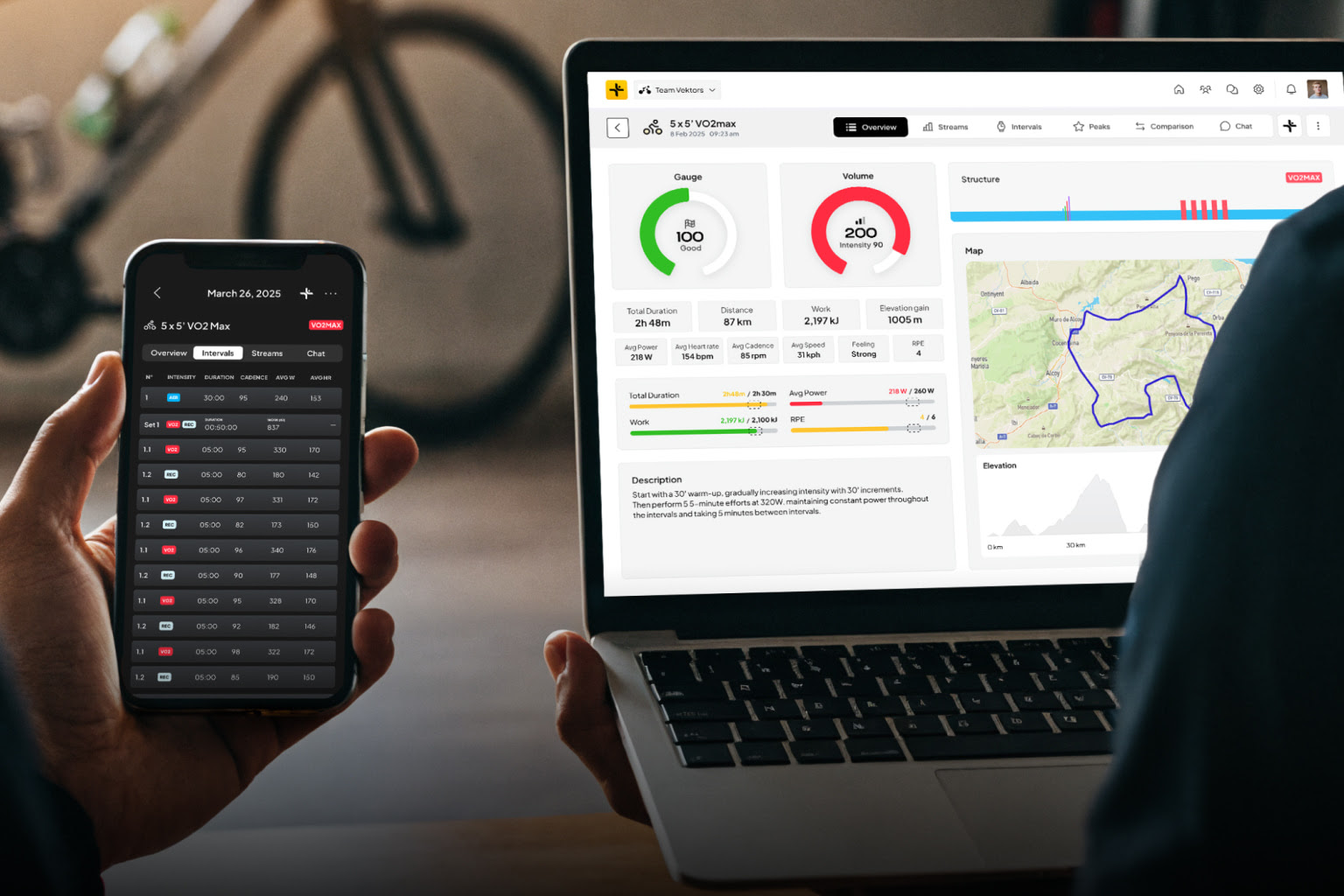
That’s exactly how I use Vekta.
It doesn’t replace my coaching.
It amplifies it.
Coaching the Athlete, Not the Numbers
One lesson I’ve learned is that identical data can tell completely different stories.
Two athletes complete the same interval session.
Same power.
Same heart rate.
Same duration.
One finishes feeling confident and motivated.
The other barely survives the workout because work has been stressful for weeks and sleep has been poor.
If you only look at the numbers, both sessions appear identical.
They aren’t.
Performance isn’t just physiology.
It’s psychology.
Lifestyle.
Nutrition.
Recovery.
Confidence.
Consistency.
The best coaching combines objective data with subjective feedback to understand the complete athlete, not just today’s workout.
Why Personalisation Matters
Every athlete adapts differently.
Some thrive with high volume.
Others respond better to intensity.
Some recover quickly.
Others need more rest than the textbook suggests.
That’s why generic plans can only take you so far.
Modern coaching should evolve continuously.
Training intensity should adapt.
Recovery should influence decisions.
Nutrition should match training demands.
Goals should evolve as fitness changes.
Personalisation isn’t a luxury anymore.
It’s becoming the expectation.als.
The Future Isn’t AI vs Coaches
People often ask whether AI will replace coaches.
I don’t think that’s the right question.
The future isn’t AI versus coaches.
It’s AI helping coaches become better.
Technology gives us faster analysis.
Better insights.
Greater scalability.
Human coaches still provide judgment, empathy, accountability and trust—qualities that athletes consistently value alongside technical expertise.
That’s a partnership no algorithm can replace.
Final Thoughts
The goal has never been to create the perfect training plan.
The goal is helping athletes make better decisions every single day.
Technology makes that easier.
Experience makes it meaningful.
When the two work together, athletes don’t just train harder.
They train smarter.
And in endurance sport, that’s often the difference between finishing with regret and reaching your biggest goals.
Matteo Cigala
Founder & Head Coach