See your speed in every gear at any cadence, for your chainrings, cassette and tyres. Useful for choosing gearing for a climb, a gravel race or a sportive.
Speed = cadence × (chainring ÷ cog) × wheel circumference. A bigger chainring or a smaller cog gives you more speed for each pedal turn; the opposite makes climbing easier.
Development is how far the bike travels for one turn of the pedals, in metres. It's the easiest way to compare gears across different bikes and tyre sizes.
On a long climb most riders are happiest at 80–90 rpm. Look at your speed in your easiest gear at 80 rpm and compare it with your speed on the climb (our climb time calculator gives you that). If you'd be grinding below 70 rpm, a bigger cassette or a smaller chainring will help.
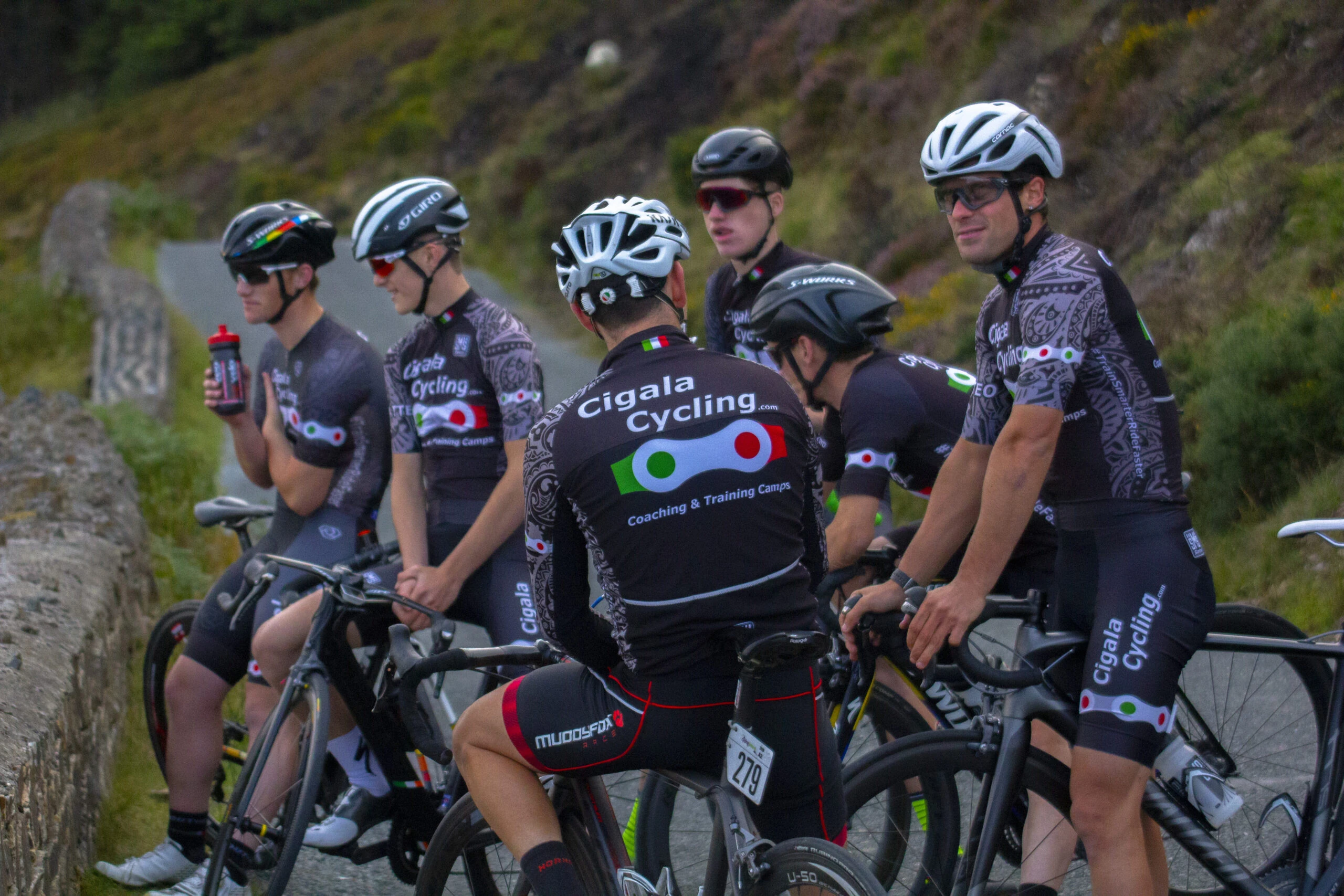
Not sure what gearing you need for your event? Our coaches will help you set up your bike and your plan for it.
Your 7 power zones from FTP or a 20-minute test, plus heart-rate zones from your threshold heart rate.
Open the calculator →How many grams of carbs to take each hour, and what that means in gels and bottles, for your ride.
Open the calculator →Your Critical Power and W′ from two all-out efforts, and the power you can hold from 2 to 20 minutes.
Open the calculator →How long a famous climb, or your own, will take at your power and weight, and the power you need for a target time.
Open the calculator →Weigh yourself before and after a ride to find how much you sweat, and how much to drink per hour.
Open the calculator →For triathletes: your Critical Swim Speed from a 400 m and a 200 m time trial, and your training paces.
Open the calculator →Your FTP from a ramp test, an 8-minute or a 20-minute test, with your W/kg and a link to your training zones.
Open the calculator →