
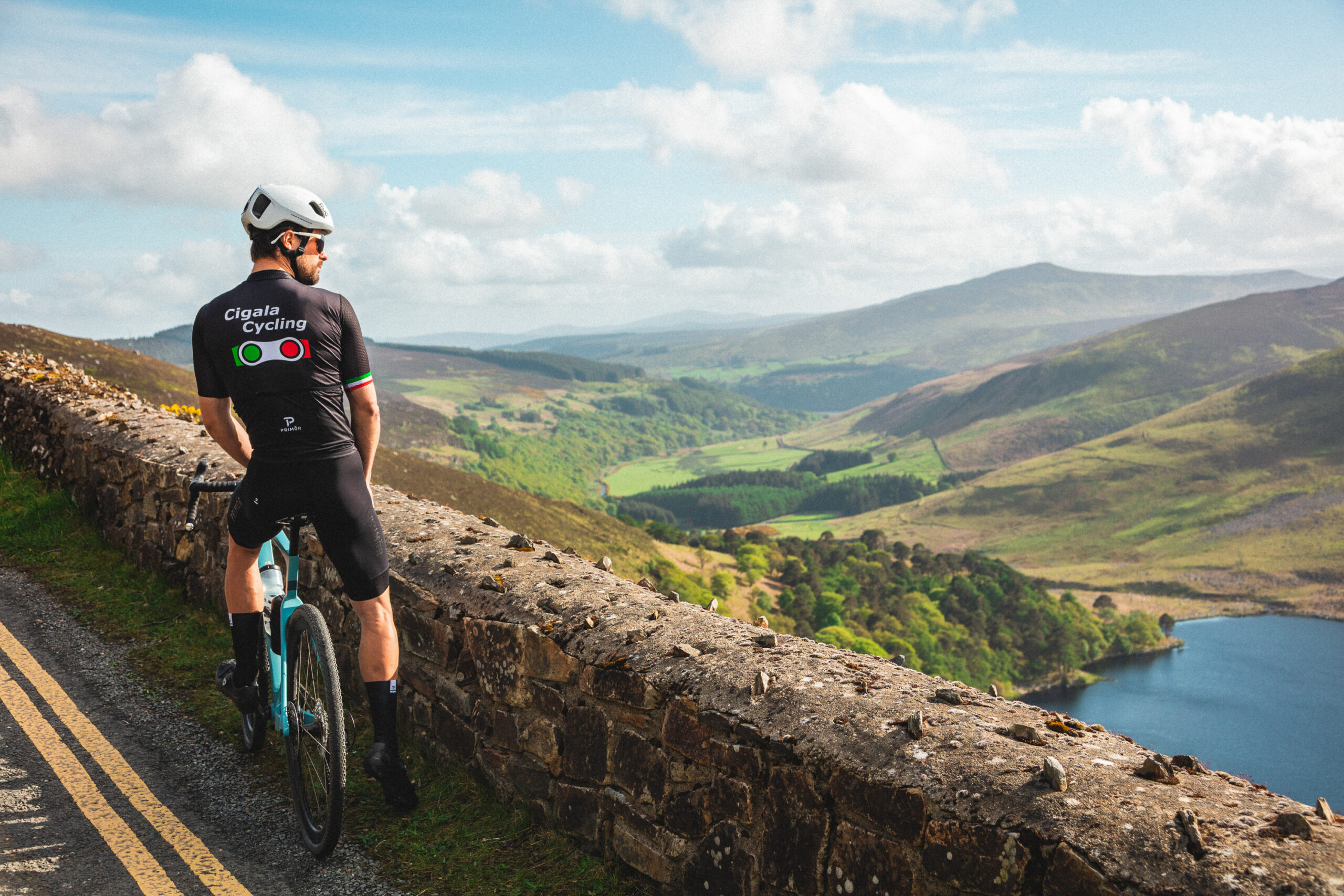
If you’ve ridden in the Lake District, you already know why the Fred Whitton Challenge has the reputation it does. Over 180km and 4,000m+ of climbing, the route stacks together Wrynose, Hardknott, Honister, Newlands and Kirkstone — five of the steepest, most punishing climbs in England, several with sustained gradients over 25%. It’s not the longest sportive in the UK. It’s simply one of the hardest, and it exposes weaknesses in a rider’s preparation faster than almost any other event on the calendar.
I’ve coached UK-based riders or riders from Ireland travelling to the UK for the Fred Whitton for several seasons now, and the pattern is always the same: riders who train for distance struggle, and riders who train for gradient thrive. This guide is built around that distinction.
Why Fred Whitton Punishes the Wrong Kind of Fitness
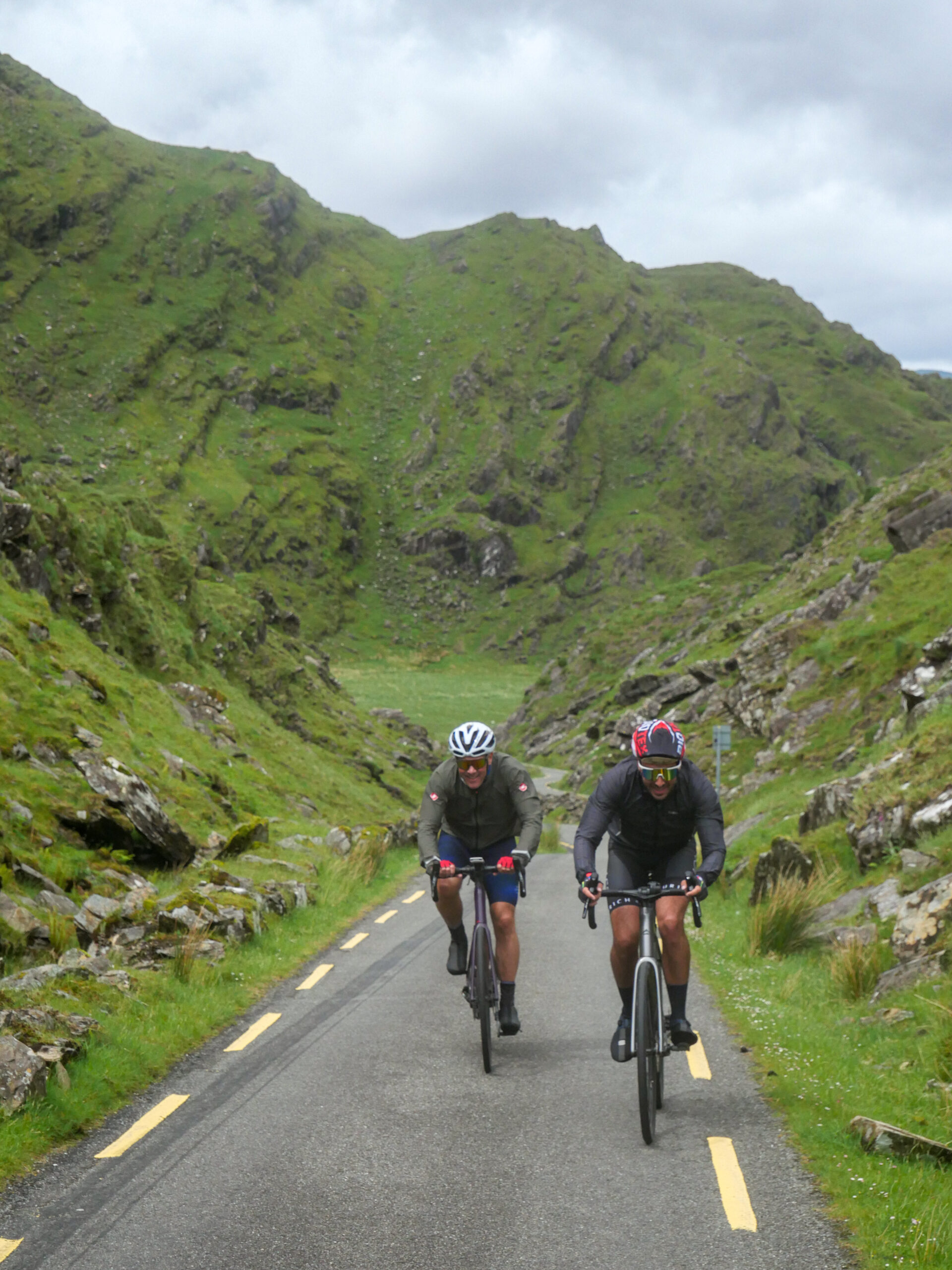
Most sportive training plans are built around steady-state endurance — long, flat-ish rides that build aerobic base and time in the saddle. That’s necessary, but it’s not sufficient for Hardknott, where gradients regularly exceed 30% and riders are forced out of the saddle at very low cadence for sustained periods.
What actually determines whether you finish Fred Whitton strongly comes down to three things:
Muscular endurance at low cadence — the ability to produce force for minutes at a time at 40-50rpm, which is a completely different physiological demand than spinning at 90rpm on a rolling road.
Repeatability — you’re not climbing once. You’re climbing five brutal ascents on tired legs, hours apart, on a course with almost no flat recovery sections between them.
Descending control on technical, narrow roads — Hardknott and Wrynose are single-track in places, with hairpins and loose surfaces. Poor descending technique costs far more time — and safety margin — than most riders expect.
A generic “century ride” training plan doesn’t develop any of these specifically. A plan built around them does.
Building the Engine: 12-16 Weeks Out
The physiology above isn’t new. What’s new is the delivery method: getting meaningful amounts of lactate into an athlete’s system through the gut, in a gel, without triggering digestive distress — something that had been a practical bottleneck for years. A small group of researchers, working out of the Basque Country in Spain, developed a gel combining lactate with carbohydrate (roughly a 40g carbohydrate to 5g lactate ratio in one prominent product), designed to be layered on top of an athlete’s existing carb intake rather than replacing it. The pitch is straightforward: alongside the carbohydrate already fueling the ride, exogenous lactate offers muscles another readily oxidizable fuel source, and may also act as a mild acid-base buffer that takes some of the sting out of sustained hard efforts.
What the Controlled Research Actually Shows
This is the base phase, and it’s where most of the season’s climbing-specific work gets banked.
Weekly long ride with hill repeats built in. Rather than one long flat ride, structure your long ride around a local climb you can repeat 4-6 times, focusing on staying seated and controlling cadence above 60rpm even as fatigue builds.
Dedicated low-cadence strength work. Once a week, a session of 4-6 x 5-minute efforts at 50-55rpm, moderate-hard effort, big gear, seated. This is the single most specific thing you can do to prepare for Hardknott and Wrynose.
Zone 2 volume. The aerobic base still matters enormously for a 180km day — this is what lets you arrive at Hardknott (which comes late in the route) with something left. If you haven’t built this properly, no amount of climbing-specific work will save you on the day.
Race-Specific Phase: 6-8 Weeks Out
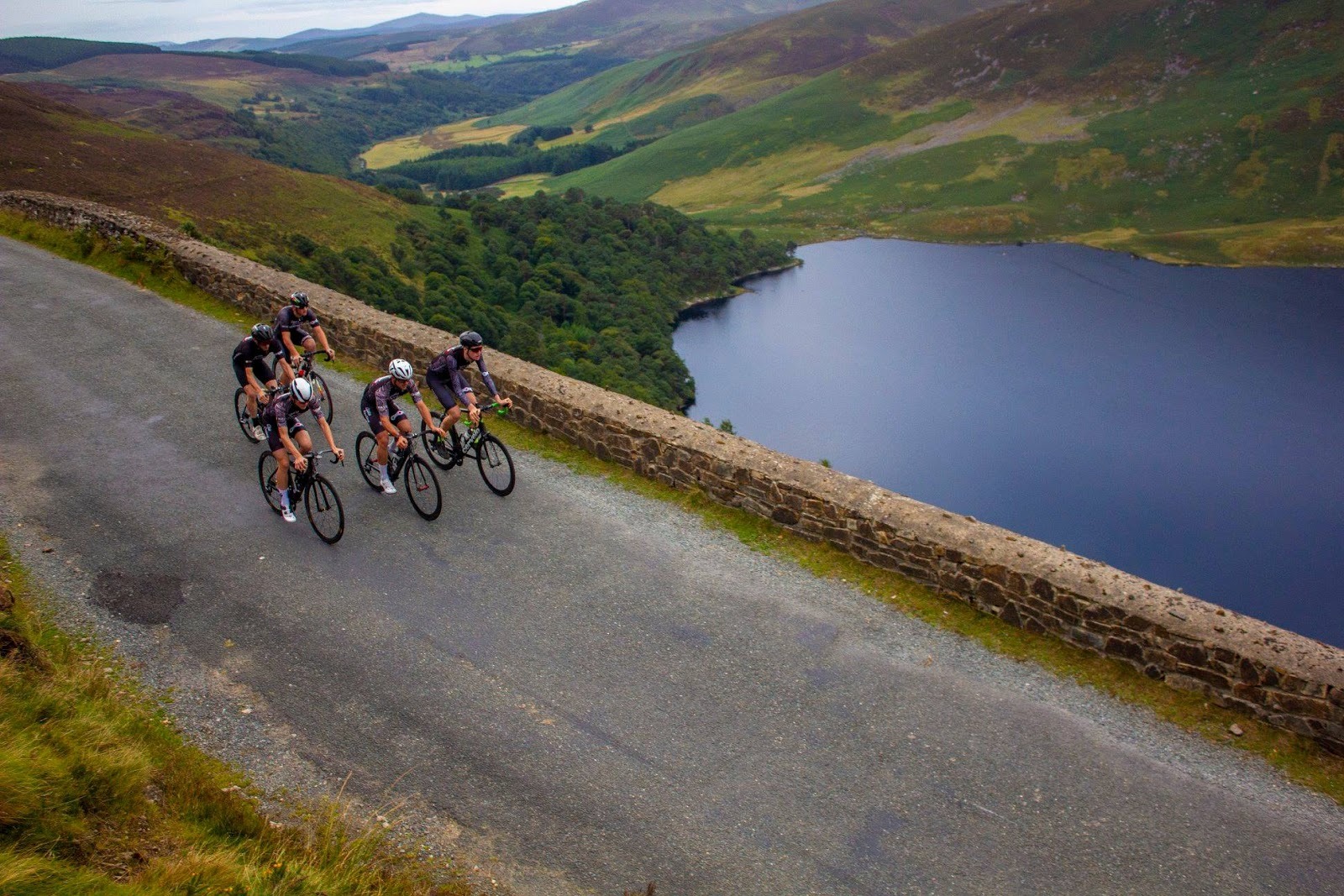
This is where training shifts from general climbing strength to simulating exactly what the course demands.
Back-to-back hard climbing days, mimicking the fatigue you’ll be climbing Hardknott and Newlands under. If you have access to any steep, sustained climb near you, repeat it late in a long ride rather than early, when you’re fresh.
Out-of-saddle intervals at very low cadence (35-45rpm) to specifically prepare the neuromuscular system for gradients over 25%, which most UK riders simply never encounter in day-to-day training.
Descending practice on technical roads. If you can get to the Lakes for a recon ride even once before the event, do it — knowing the hairpins on Hardknott’s descent in advance removes a huge amount of unnecessary risk and hesitation on the day.
Taper: Final 2 Weeks
Volume drops sharply, but don’t drop intensity entirely — short, sharp efforts (2-3 x 3 minutes at threshold) keep the legs primed without adding fatigue. Prioritise sleep and carbohydrate availability in the final week over any last-minute fitness gains; by this point, the training is banked.
Race Day: What Actually Wins or Loses You the Ride
Pace conservatively on Wrynose and Hardknott. They come relatively early in the route (around 90-95km in), and going too hard here is the single most common reason riders blow up on Newlands and Honister later.
Eat before you’re hungry, drink before you’re thirsty. With this much sustained climbing, energy deficits compound quickly and are very hard to recover from mid-ride.
Gear choice matters more than pride. A compact chainset with a 32-34t cassette isn’t optional on this course — it’s the difference between a controlled cadence and grinding your knees into the tarmac at 4%.
How We Build This Into a Coaching Plan
Every rider arrives at Fred Whitton with a different starting point — some are strong on volume but have never trained low-cadence strength work, others are natural climbers who’ve never ridden 180km in one go. A generic template doesn’t account for that. As part of our cycling coaching in the UK, we build event-specific plans around your current numbers (CP, W′, FTP), your available training time, and the gaps that matter most for the course you’re targeting — whether that’s Fred Whitton, Dragon Ride, or anything else on the UK calendar.
FAQ
How many watts do I need to finish Fred Whitton?
There’s no single number — finishing comes down to pacing and fuelling as much as raw power. That said, most riders who complete it comfortably are managing sustained efforts in the 65-75% FTP range on the climbs, with the ability to produce short bursts well above that on the steepest ramps.
Is Fred Whitton harder than Dragon Ride?
They’re hard in different ways. Dragon Ride is longer with more cumulative distance; Fred Whitton is shorter but far steeper, with gradients that most UK riders never train on. Riders coming from flatter regions of the UK often find Fred Whitton’s gradients the bigger shock.
What gearing do I need for Hardknott Pass?
A compact chainset (50/34) paired with a wide-range cassette (11-32 or 11-34) is close to essential for most riders. Hardknott’s steepest sections exceed 30%, and being under-geared here isn’t just uncomfortable — it can force you off the bike entirely.
How long before the event should I start training specifically for it?
12-16 weeks of dedicated preparation is ideal if you’re coming from a reasonable aerobic base. If you’re starting from a lower fitness level, building that base first pushes the total timeline closer to 20-24 weeks.
Matteo Cigala
Founder & Head Coach